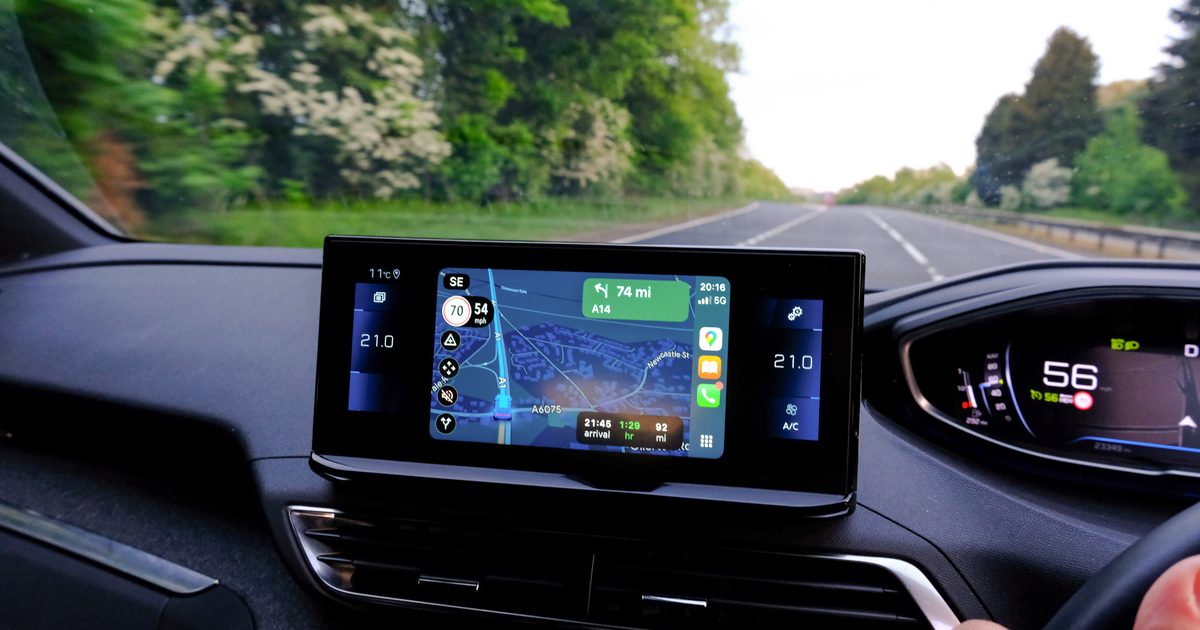
Almost half of motorists say touchscreens make driving more distracting, as safety experts call for a return to physical controls.
The ever-larger touchscreens now fitted to modern cars may be increasing distraction behind the wheel, according to nearly half of UK drivers.
A new survey found that 47% of UK motorists think touchscreen dashboards are more distracting than conventional physical buttons.
The research, carried out by car insurance specialists Quotezone, comes as safety authorities in several regions of the world raise concerns about touchscreen-based vehicle controls.
Touchscreens are now a common feature in new vehicles, with research indicating that 97% of new cars launched since 2023 have included a central touchscreen.
Safety concerns over touchscreen controls
The worries are not confined to drivers alone.
Independent vehicle safety bodies around the world have also questioned whether touchscreens are the safest way to manage important functions while driving.
From the start of 2026, the European New Car Assessment Programme (Euro NCAP) began lowering the safety ratings of cars that lack physical buttons or switches for indicators, hazard lights, horns, windscreen wipers and the SOS function.
Comparable concerns have also been voiced by ANCAP Safety, the independent vehicle safety assessment programme for Australia and New Zealand. It has urged manufacturers to “bring back buttons” for key driver controls from 2026.
China is moving in the same direction, with new cars set to be required to include physical buttons for essential functions from 1 July 2026.
Touchscreens can take your eyes off the road
The concerns highlighted by Quotezone’s survey are also backed up by UK research into how drivers interact with touchscreen controls.
The study found that drivers were significantly affected when trying to control a vehicle’s position and maintain a steady speed. They also looked away from the road for longer than recommended under National Highway Traffic Safety Administration (NHTSA) guidelines.
Reaction times to hazards also worsened when drivers used in-car systems to select music. The effect on reaction times was found to be worse than texting while driving.
Some vehicles already block drivers from accessing certain touchscreen functions, such as texting, while the car is in motion.
There also appears to be support for tighter limits. More than half (53%) of motorists surveyed said they would back restrictions on functions including built-in music players and sat navs.
Could touchscreen technology affect insurance?
The possibility that touchscreen technology may distract drivers is also becoming a concern for insurers.
Anything that raises the likelihood of a crash could eventually affect insurance claims and premiums.
Greg Wilson, car insurance expert and CEO at Quotezone, said: “Using a mobile phone while driving is rightly banned due to the distraction it causes, but our survey shows that modern car touchscreens are becoming increasingly distracting for motorists.
“Drivers are now expected to adjust essential settings with a swipe or touch through menus and screens rather than simple buttons, which can take people’s attention away from the road for longer than many realise.
“Touchscreens are predicted to increase in size in the next few years, but with safety concerns gaining momentum around the world, it’s time to review this innovation and make sure safety is the top priority.
“Distraction is one of the main contributing factors to collisions on our roads, drivers need to be wary and make sure they don’t let anything inside or outside the car distract their attention.”
Survey details
Quotezone’s findings are based on a randomised survey of 1,000 respondents across the UK during March 2026, representing a margin of error of approximately 5% at a 95% confidence level.
Contact to : xlf550402@gmail.com
Copyright © boyuanhulian 2020 - 2023. All Right Reserved.