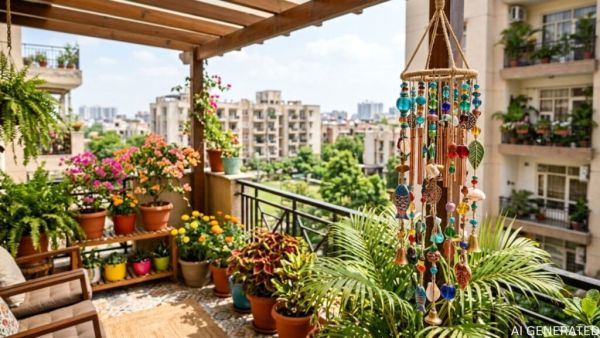
The festival of Diwali is about to come and for this special day, we start cleaning and decorating the house for many months. Talking about decorations, today we will focus on one special thing, that is wind chimes. Today we will tell you what are the benefits of using it, what is the importance of each of its rods and how it came to India and by what name it is called.
Wind chimes are a great way to generate positive energy and remove mental tension at home. In Vastu Shastra and Feng Shui, it is considered a symbol of happiness, prosperity and good fortune. A very popular and beautiful home decor item, which makes a sweet and soothing sound when blown by the wind. These are usually hung on doors, windows, balconies or gardens of homes.
What are the benefits?
Removing negativity: The melodious sound of wind chimes removes the negativity present in any corner of the house and brings positivity.
Tension and Mental Peace: Its slow and melodious sound calms the mind, reduces stress and helps in increasing the power to concentrate.
Remedies for Vaastu defects: Wind chimes are useful to remove any wrong construction of the house or Vaastu defect occurring between opposite doors.
Good luck and prosperity: Installing a wind chime in the right direction and with the right rods brings wealth to the house and leads to career advancement.
What is the benefit of choosing direction and material?
According to Vastu and Feng Shui, whatever metal or material the wind chime is made of, it should be hung in the direction to that. If you have a metal wind chime, then place it in the west-northwest or north direction, this gives new opportunities in career. If your wind chime is made of wood or bamboo, then place it in the east and south direction, this brings happiness, peace and prosperity in the family. If your chime is made of ceramic or clay, then place it in the south-west, north-east, this brings stability in life, mental balance and strength in relationships.
Different importance of rods used in wind chimes
While buying a wind chime, it is important to pay attention to the number of pipes or rods installed in it. If it has 4 rods then place it on the main door, it attracts positive energy. If there are 5 rods then it is active in bringing the five elements (earth, water, fire, air, sky). It would be appropriate to install it in the living room. Wind chime with 6 rods brings happiness, prosperity, better relationships and success in career. It can be installed anywhere. The one with 7 rods is perfect for children’s room or study room as it enhances creativity.
Hang height: Place the wind chime in a place where natural air comes (like balcony, window or main door), so that its sound keeps resonating after hitting the wind.
Do not apply directly above the head: Never hang a wind chime in a location directly below where you sit or sleep (such as directly above a bed or working desk).
Sweet voice: Choose only that wind chime whose sound sounds melodious and calm to the ears. A harsh or very loud wind chime can increase negativity.
Where did the name Kaan come from?
Wind chimes originated in ancient times in China, Southeast Asia, India, and Ancient Rome. In ancient China, they were initially made from bones, shells, bamboo and later from bronze. In China they were called ‘Feng Ling’ and were hung in temples and palaces to ward off evil spirits, bring good luck and balance positive energy (chi) according to Feng Shui.
In India during the 2nd century AD, small wind bells were placed at the corners of large pagodas and temples to ward off evil spirits and birds, and to promote meditation and inner peace. In Rome these were called ‘Tintinnabulum’. These were usually made of bronze and were hung on homes, gardens and doors as symbols of protection and prosperity. Later in Japan, they were known as ‘Fūrin’, which are made of glass or metal to provide a feeling of coolness and peace especially in summer.
Contact to : xlf550402@gmail.com
Copyright © boyuanhulian 2020 - 2023. All Right Reserved.