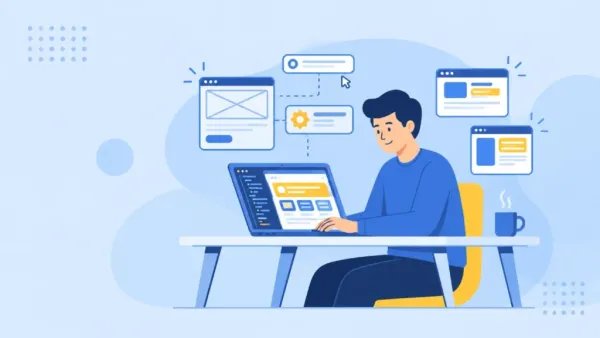
AI Software development has always moved along with new tools. From early compilers to integrated development environments (IDEs), every technical jump changed how people work. Still, a lot of those changes kept the same core pattern: humans writing code, line by line. Now, artificial intelligence is starting to nudge that setup in a pretty fundamental way.
In 2026, AI-driven software development tools are not just little experiments anymore, or side projects for a few engineers. They are quickly turning into core parts of the everyday software workflow. Developers use AI systems to spin up code, spot vulnerabilities, automate testing, fine-tune infrastructure, and even handle the deployment pipeline sort of management.
But this transformation isn’t only about comfort or speed. It’s actually starting to change the structure of software engineering itself.
Instead of just being code writers, many developers now act like architects, reviewers, and supervisors of AI-produced systems. The software industry is moving toward a phase where coding becomes partially automated, while software design, supervision, and decision-making become even more valuable.
And honestly, the rise of AI-driven software development tools might end up reshaping not only how software is built, but also who builds it, and what programming even means, later on.
From Autocomplete to Autonomous Assistance
The earliest generation of AI coding tools worked mostly like advanced autocomplete tools. They proposed code fragments based on context, plus whatever patterns had been seen before and written.
Modern AI development tools go far past that, a lot more than people expect. For example, platforms like GitHub Copilot, built through collaborations involving Microsoft and OpenAI, can now craft whole functions, walk through explanations of codebases, and also help with debugging in a more guided way.
Likewise, AI systems plugged into cloud development platforms are getting better at things like:
- Code generation
- Refactoring
- Documentation creation
- Test automation
- Infrastructure configuration
So the developer isn’t just sitting inside a text editor anymore. Increasingly, they’re partnering with an AI system that can grasp the wider software context, and then produce usable results, more like a cooperative act than a simple suggestion.
AI software development As A Pair Programmer
One of the more significant shifts in modern development is how AI shows up as a “pair programmer” now. Traditionally, pair programming meant two human developers working together — one types the code and the other checks logic and structure. But with AI tools, that collaborative vibe is getting shared, at least in part.
Developers describe workflows where AI does things like:
- Suggests implementation strategies and keeps going
- Explains unfamiliar APIs and weird documentation patterns
- Rewrites inefficient code, then usually adds a cleaner structure
- Generates boilerplate structures instantly, like “done” with minimal fuss
So overall, it cuts down repetitive work and tends to speed up development. For junior developers, AI can feel almost like a real-time mentor, helping them without stopping everything. For experienced engineers, it often works like a productivity multiplier, reducing the friction in day-to-day tasks.
The result is a workflow where coding becomes more and more conversational. Instead of manually assembling every function, developers end up describing intentions first, and then refine what the AI generates afterward.
Testing and Debugging Are Getting Automated Now
Software testing used to be one of the most time-consuming parts of development. But with AI-driven testing tools, the whole process is changing pretty fast, and honestly, in a dramatic way.
Modern systems can:
- Generate test cases on their own
- Find anomalies in how code actually behaves
- Foresee potential vulnerabilities early
- Scrape logs and look for failure patterns
Then machine learning models trained on huge software repositories can spot common coding errors before applications ever get deployed.
Also, some tools simulate user behavior dynamically, which helps developers uncover those edge-case failures that classic testing might not even catch.
So yeah, this automation boosts efficiency, but it also nudges quality assurance teams into a different role. Instead of manually crafting every single test, developers are increasingly supervising AI-generated testing pipelines.
DevOps and AI-Powered Deployment
Honestly, AI is also messing with how infrastructure is managed and how deployment workflows actually run. In older DevOps setups, engineers still had to manually configure cloud resources, watch system performance, and fine-tune deployment pipelines bit by bit. But now, with AI-driven infrastructure tools, stuff like this becomes possible: predict scaling needs, catch deployment risks earlier, suggest infrastructure optimizations, and even automate rollback procedures when things go sideways.
And yeah, the cloud giants- Google, Amazon, and Microsoft are pushing AI pretty deep into their development ecosystems. That means you end up with more and more autonomous deployment pipelines that can adjust systems dynamically, almost in real time.
In the long run, the idea is “self-healing” infrastructure, where AI keeps monitoring applications continuously, then resolves operational issues on its own, without much human intervention.
Low-Code and No-Code Platforms
AI-driven software development is making it easier for non-programmers to jump in without feeling like they need to know every programming detail. With low-code and no-code platforms, people can put together apps using visual interfaces instead of relying on the usual programming languages. And the AI part really nudges that movement along, because it can take what you say in plain language and turn it into working software parts.
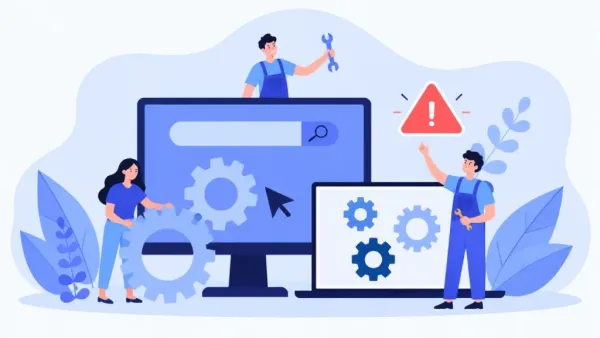
For instance, a user might outline a workflow, or a business application, or even a database structure, and then the AI systems generate a big chunk of the needed code on their own. So yes, it democratizes making software, but it also sparks worries in the developer community about whether automation will reshape or reduce traditional programming roles.
The Productivity Boom And Its Limits
People who back AI-based development tools say they are giving software engineering some of the biggest productivity surges ever seen. Things that used to take hours now get done in minutes, and it almost feels like a simple swap of effort. Stuff like boilerplate generation, documentation drafts, and that repetitive debugging grind is getting automated more and more.
Because of that, developers can spend more attention on system architecture, product design, security, and user experience. At least in theory, it’s a cleaner flow, less clicking around, more thinking.
But the gains don’t come for free; there are trade-offs. AI-generated code is not always dependable. The models can do things like slip in subtle bugs, deliver implementations that are less secure than they should be, or keep using coding habits that are already outdated. They can also read the developer’s intent a bit wrong, or just assume something convenient.
So even with automation, human oversight stays essential. In practice, developers tend to write less code and spend more time reviewing what the model produced, validating it, and fixing the inevitable oddities that appear after the first run.
Security Risks and Trust Issues
Security has kind of become one of the biggest headaches around AI-generated software. AI systems trained on public code repositories might, sometimes, re-emit insecure patterns or vulnerable dependencies by accident. And in a few situations, developers can start trusting the AI-produced code too fast, without really getting how it behaves in practice.
So it starts to create problems in:
- Authentication systems
- Cloud infrastructure
- Database access
- API security
Then there is the extra layer of worry about intellectual property. AI models trained using open-source repositories keep bringing up legal and ethical questions about who truly owns the code, and whether proper attribution is even there.
As AI-generated software becomes more and more common, software governance along with security auditing is turning more and more essential.
The Changing Role of Software Developers
Maybe the most profound impact from AI-driven development tools is how they kinda reshape the role of the developers themselves. Programming is moving, slowly but pretty surely, from manual implementation toward system orchestration and oversight. At the same time, developers are increasingly acting like problem solvers, workflow designers, AI supervisors, and even system architects, all in the same day.
And to be clear, it doesn’t automatically kill programming jobs, but it absolutely changes the required skill set. You start needing a deeper grasp of software architecture, security principles, and system reliability, plus what the AI can and can’t do or where it fails. Understanding these areas may become more crucial than just memorizing syntax, and honestly the difference feels subtle at first, then it suddenly isn’t.
AI And The Democratization Of Making Software
AI-enabled development tools could open up a wider door for software creation around the world, like way beyond the usual hubs. In places where higher technical education is limited, AI support can make it easier to step in for people who want to build and ship things.
Small startups and independent creators in particular might get to launch sooner, even with fewer resources and less time. That kind of “democratization” could end up speeding up innovation, especially in emerging markets where software demand is rising quickly, and pretty steadily.
Still, there’s a tradeoff: it might also crank up competition, because the old technical barriers that kept certain specialized expertise more insulated are lowered.
Will AI Replace Programmers?
This question kinda dominates the public conversation when people talk about AI development tools. But really, most industry experts think AI will change programming a lot, not fully erase it. Software development is not only “writing code”; it includes a bunch of stuff like
grasping the business requirements, designing scalable systems, making architectural trade-offs, and then handling security and ethics.
All of that demands contextual reasoning and human judgment, which current AI can’t do reliably, as of yet. So instead of swapping developers out entirely, AI is probably going to automate a bunch of repetitive implementation tasks, while making the higher-level engineering skills feel more important. The role changes, but it doesn’t vanish, not in any clean way.
The Future of AI Native Development
The next stage of software engineering might end up being fully AI-native, not just with tools around it but actual end-to-end workflows. In the future, systems could generate full applications from plain natural language prompts, and also keep improving live software while it’s running. They might even detect vulnerabilities on their own, then coordinate deployment and scaling without any real manual intervention.
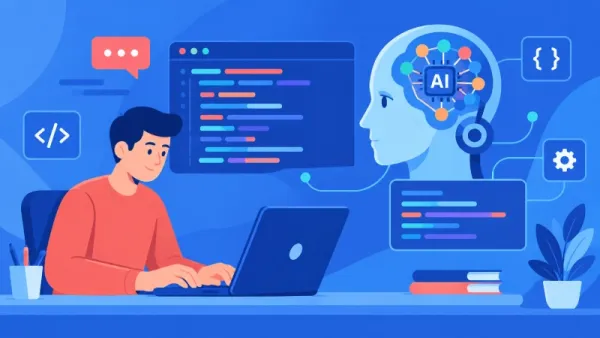
In that kind of setup, developers won’t be typing as much; they’ll mostly set direction, define goals and limits, and let the AI handle the nitty-gritty implementation details. It feels like a big leap in the whole history of programming, moving from writing instructions by hand to being more like supervisors for intelligent systems.
Conclusion: Programming Is Becoming Collaborative Intelligence
AI-powered tools for software creation are quietly reshaping one of the world’s key industries. In a lot of places, coding is moving away from a purely manual craft, and it is starting to feel like a more cooperative process between people and intelligent systems.
These tools bring a stack of advantages, like quicker development cycles, improved output capacity, easier entry into building software, plus more efficient testing and release.
Still, it comes with fresh complications: trust concerns, security pressure, reliability questions, and even changes to the workforce. So it’s not just “faster” and done; there’s more nuance.
By 2026, software development is not only about writing code, or at least not only that. It’s increasingly about steering, checking, and cooperating with AI systems that can generate software on their own.
So the future developer might spend less time typing syntax and more time designing the overall system, reviewing AI output, and tackling those thorny human problems that don’t fit neatly into a prompt.
Programming isn’t going away. It’s morphing into a new kind of shared cognitive capability between humans and machines, even if everyone won’t call it that out loud.
(Source)
Contact to : xlf550402@gmail.com
Copyright © boyuanhulian 2020 - 2023. All Right Reserved.