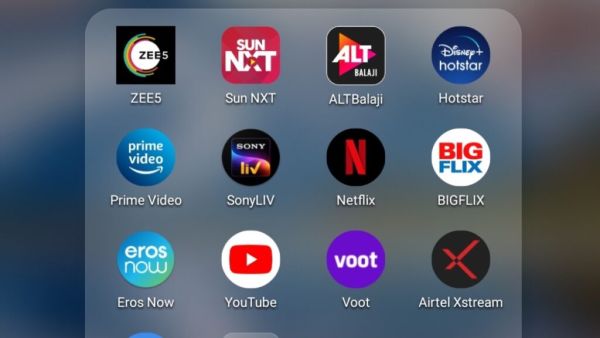
Mumbai: The rise of OTT platforms has fundamentally altered the economics and creative landscape of Bollywood and Indian cinema. What was once considered a secondary release window has now evolved into a crucial safety net, offering filmmakers financial security, creative freedom and assured reach at a time when theatrical risks have increased significantly.
Search trends for “OTT vs theatre Bollywood”, “why films release on OTT” and “OTT impact on Indian cinema” highlight a growing audience interest in understanding how streaming platforms are reshaping the industry.
Theatrical uncertainty pushed filmmakers towards OTT
Over the past few years, Bollywood has faced unpredictable box office outcomes. Rising ticket prices, selective audience turnout and post-pandemic viewing habits have made theatrical releases increasingly risky — especially for mid-budget and content-driven films.
OTT platforms such as Netflix, Amazon Prime Video, JioCinema and Disney+ Hotstar stepped in by offering guaranteed acquisition deals, reducing dependence on opening-day box office numbers.
For producers, this meant assured revenue even before a film reached audiences.
OTT as a financial cushion for filmmakers
One of the biggest advantages OTT provides is financial predictability. Unlike theatrical releases, where recovery depends on footfall and word of mouth, OTT deals often involve fixed payouts or minimum guarantees.
This model has helped:
- Small and mid-budget films avoid theatrical losses
- Producers recover investments quickly
- Studios experiment without fear of commercial failure
Several films that may have struggled in cinemas found massive viewership on streaming platforms, reinforcing OTT’s role as a fallback mechanism.
Creative freedom found a new home online
OTT platforms have also allowed filmmakers to explore unconventional narratives that rarely find space in theatres. Stories focusing on social issues, niche genres or slow-burn storytelling have flourished online.
Content creators have repeatedly stated that OTT platforms allow:
- Longer runtimes without commercial pressure
- Stronger character development
- Stories driven by writing rather than star power
This shift has broadened the definition of what “successful cinema” looks like in India.
Regional cinema gained nationwide reach
OTT did not just benefit Bollywood — it transformed regional Indian cinema. Films from South India, Marathi, Bengali and Malayalam industries gained national and global audiences through subtitles and dubbing.
Movies that once had limited regional releases now reach viewers across India and overseas, strengthening OTT’s position as a unifying platform for Indian storytelling.
OTT rescued films delayed or shelved
Several projects stalled due to production delays or market uncertainty found renewed life through OTT releases. Films that missed theatrical windows were acquired and released digitally, ensuring they reached audiences instead of remaining unreleased.
For actors, writers and technicians, this meant continued visibility and relevance despite industry slowdowns.
Changing audience behaviour strengthened OTT’s role
Modern audiences increasingly prefer:
- On-demand viewing
- Affordable entertainment
- Comfort of home viewing
OTT platforms align perfectly with these preferences. The success of direct-to-digital releases has proven that theatrical success is no longer the sole benchmark of impact.
What this means for the future of Indian cinema
OTT has not replaced theatres — but it has balanced the ecosystem. Big-budget spectacles still rely on cinemas, while OTT platforms safeguard smaller films from commercial risks.
As Indian cinema continues to evolve, OTT platforms are likely to remain a critical safety net, offering stability in an otherwise unpredictable market.
Contact to : xlf550402@gmail.com
Copyright © boyuanhulian 2020 - 2023. All Right Reserved.