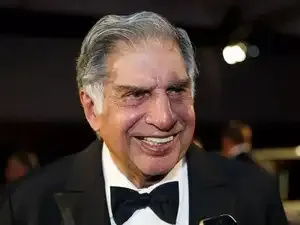
Tata Trusts is said to be weighing the drafting of a trust deed for the Sir Ratan Tata Trust (SRTT) as part of a broader review of governance structures, with chairman Noel Tata having discussed the issue with senior legal professionals, according to people with knowledge of the matter.
The deliberations come amid renewed focus on trustee appointments at SRTT, after an earlier meeting convened to consider the induction of a new trustee — Neville Tata — had to be postponed due to lack of quorum, sources said. Under the trust’s existing framework, the induction of a new trustee requires unanimous nod from all serving trustees. Neville Tata, son of Noel Tata, was appointed as a trustee of the Sir Dorabji Tata Trust (SDTT) in November 2025.
Noel Tata, Venu Srinivasan, Vijay Singh, Jimmy N Tata, Jehangir HC Jehangir and Darius Khambata are currently trustees of the Sir Ratan Tata Trust. Tata Trusts is scheduled to hold another meeting today. Neville Tata’s induction could come up for discussion, officials close to the matter said.
Tata Trusts declined to comment.
While the Sir Dorabji Tata Trust already operates under a formal trust deed, the Sir Ratan Tata Trust — constituted in 1918 — continues to function under a will and does not currently have a written trust deed.
Yash Vardhan Singh, counsel at Sarvaank Associates, said the changes make it imperative for legacy trusts to move away from default statutory interpretations.
“A trust deed allows leadership arrangements to be governed by mission-specific rules, reducing the risk of disputes over trustee tenures,” Singh said.
This has become increasingly untenable, he said, in the context of the Maharashtra Public Trusts (Amendment) Ordinance, 2025, which came into effect on September 1, 2025, and introduces new rules governing trustee appointments, tenure and prescribed limits.
“For the Sir Ratan Tata Trust, which has operated under a 1918 will for over a century, the transition has become necessary following the ordinance, which caps perpetual trustees at 25% and mandates fixed tenures where governing documents are silent,” he said.
The Sir Ratan Tata Trust and the Sir Dorabji Tata Trust are the two principal charities within Tata Trusts, together holding about 52% of Tata Sons, and forming the core of decision making within the Tata Group. Tata Sons is the holding company of the Tata Group.
Legal view
Legal experts said the possible move to execute a formal trust deed would mark a significant shift in SRTT’s governance framework, transitioning it from a purely testamentary arrangement to one aligned with contemporary trust law and reducing ambiguity around leadership and trustee tenure.
Although public trusts are not legally required to have a written trust deed, they must have some form of founding document or “instrument of trust” for registration purposes. The recent ordinance effectively provides a safety net for trusts operating without clear documentation on trustee tenure — an issue that had reportedly led to significant litigation.
The ordinance, notified in September, limits the number of perpetual trustees to one-fourth of a trust’s total board strength. It also introduces new procedures for the appointment and reappointment of tenure-based trustees, including a five-year cap where trust deeds are silent on term limits. The move is seen by many as a response to recent governance conflicts within Tata Trusts, which holds a 66% stake in Tata Sons, and as signalling a broader shift in how large public trusts — particularly those with corporate linkages — may be required to structure their boards going forward.
Executing a trust deed for SRTT would bring greater clarity to its governance and administrative framework, said Ajay Khatlawala, senior partner at Little & Co.
“While the trust currently functions under a will, a trust deed would clearly set out governance practices, internal administration, and the duties, obligations and responsibilities of trustees,” he said. “It would also reduce ambiguity inherent in testamentary arrangements by laying down procedures for meetings, decision-making, use of trust funds, and the succession and nomination of trustees.”
Tenure clause
Public trusts should proactively amend their governing documents to align with the amended Maharashtra Public Trusts Act, said Madhavan Srivatsan, senior partner at Emerald Law.
“The Act now clearly distinguishes between trustees appointed for life and those appointed for a fixed or temporary tenure,” he said. “In light of this statutory clarity, it is advisable — particularly for trusts associated with prominent corporate groups — to expressly provide for the appointment, removal, tenure, reappointment and succession of trustees to ensure transparent governance.”
The deliberations come amid renewed focus on trustee appointments at SRTT, after an earlier meeting convened to consider the induction of a new trustee — Neville Tata — had to be postponed due to lack of quorum, sources said. Under the trust’s existing framework, the induction of a new trustee requires unanimous nod from all serving trustees. Neville Tata, son of Noel Tata, was appointed as a trustee of the Sir Dorabji Tata Trust (SDTT) in November 2025.
Noel Tata, Venu Srinivasan, Vijay Singh, Jimmy N Tata, Jehangir HC Jehangir and Darius Khambata are currently trustees of the Sir Ratan Tata Trust. Tata Trusts is scheduled to hold another meeting today. Neville Tata’s induction could come up for discussion, officials close to the matter said.
Tata Trusts declined to comment.
While the Sir Dorabji Tata Trust already operates under a formal trust deed, the Sir Ratan Tata Trust — constituted in 1918 — continues to function under a will and does not currently have a written trust deed.
Yash Vardhan Singh, counsel at Sarvaank Associates, said the changes make it imperative for legacy trusts to move away from default statutory interpretations.
“A trust deed allows leadership arrangements to be governed by mission-specific rules, reducing the risk of disputes over trustee tenures,” Singh said.
This has become increasingly untenable, he said, in the context of the Maharashtra Public Trusts (Amendment) Ordinance, 2025, which came into effect on September 1, 2025, and introduces new rules governing trustee appointments, tenure and prescribed limits.
“For the Sir Ratan Tata Trust, which has operated under a 1918 will for over a century, the transition has become necessary following the ordinance, which caps perpetual trustees at 25% and mandates fixed tenures where governing documents are silent,” he said.
The Sir Ratan Tata Trust and the Sir Dorabji Tata Trust are the two principal charities within Tata Trusts, together holding about 52% of Tata Sons, and forming the core of decision making within the Tata Group. Tata Sons is the holding company of the Tata Group.
Legal view
Legal experts said the possible move to execute a formal trust deed would mark a significant shift in SRTT’s governance framework, transitioning it from a purely testamentary arrangement to one aligned with contemporary trust law and reducing ambiguity around leadership and trustee tenure.
Although public trusts are not legally required to have a written trust deed, they must have some form of founding document or “instrument of trust” for registration purposes. The recent ordinance effectively provides a safety net for trusts operating without clear documentation on trustee tenure — an issue that had reportedly led to significant litigation.
The ordinance, notified in September, limits the number of perpetual trustees to one-fourth of a trust’s total board strength. It also introduces new procedures for the appointment and reappointment of tenure-based trustees, including a five-year cap where trust deeds are silent on term limits. The move is seen by many as a response to recent governance conflicts within Tata Trusts, which holds a 66% stake in Tata Sons, and as signalling a broader shift in how large public trusts — particularly those with corporate linkages — may be required to structure their boards going forward.
Executing a trust deed for SRTT would bring greater clarity to its governance and administrative framework, said Ajay Khatlawala, senior partner at Little & Co.
“While the trust currently functions under a will, a trust deed would clearly set out governance practices, internal administration, and the duties, obligations and responsibilities of trustees,” he said. “It would also reduce ambiguity inherent in testamentary arrangements by laying down procedures for meetings, decision-making, use of trust funds, and the succession and nomination of trustees.”
Tenure clause
Public trusts should proactively amend their governing documents to align with the amended Maharashtra Public Trusts Act, said Madhavan Srivatsan, senior partner at Emerald Law.
“The Act now clearly distinguishes between trustees appointed for life and those appointed for a fixed or temporary tenure,” he said. “In light of this statutory clarity, it is advisable — particularly for trusts associated with prominent corporate groups — to expressly provide for the appointment, removal, tenure, reappointment and succession of trustees to ensure transparent governance.”
(This story has not been edited by economictimes.com and is auto–generated from a syndicated feed we subscribe to.)