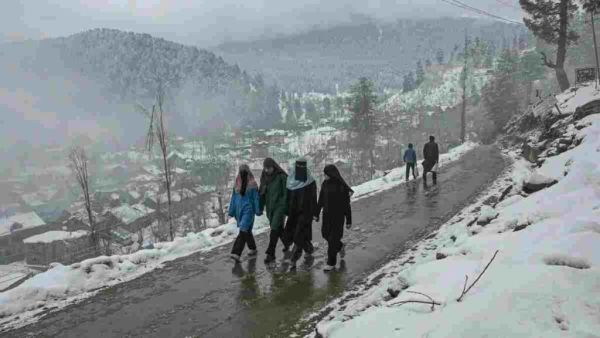
New Delhi. Once again there is going to be a big change in the weather patterns of the country. According to the latest bulletin of the India Meteorological Department (IMD), two Western Disturbances are continuously becoming active, which will directly impact the hilly and plain areas of North India. While on one hand snowfall is about to begin in the mountains, on the other hand, due to the low pressure area forming in the Bay of Bengal, a warning of rain has been issued in the eastern and southern parts. Two western disturbances have become active: White sheet will return to the mountains. According to the Meteorological Department, two different disturbances will knock in the western Himalayan region in the next few days: First disturbance: It is becoming active from today i.e. 13 February 2026, due to which Jammu, Kashmir and Himachal The weather will change in the high altitude areas. Second disturbance: It will be more effective from February 16, due to which there is a strong possibility of rain and snowfall in the entire Himalayan belt including Uttarakhand till February 17. ‘Low pressure’ in the Bay of Bengal: There will be heavy rain in these states. Along with the Himalayas, the weather is also changing in the eastern and southern parts of the country. A low pressure area is forming over the Bay of Bengal on February 15. Till February 19: Tamil Nadu, Andaman-Nicobar, Jammu-Kashmir, Himachal, Uttarakhand and Arunachal Pradesh may receive more than normal rainfall. Between February 19 and 26: The extent of rainfall will increase and there are chances of cloudy weather in Kerala, Nagaland, Manipur, Mizoram and Tripura as well. Temperature calculations: Somewhere In the second fortnight of February, temperature contrast will be seen in different parts of the country: Lower than normal temperature (cool): Mercury may remain below normal in Eastern Uttar Pradesh, Eastern Madhya Pradesh, Vidarbha, Chhattisgarh, Kerala and Andhra Pradesh. Higher than normal temperature (hot): Heat will increase in Gujarat, Central Maharashtra and South Karnataka till February 19. At the same time, after February 20, the temperature in Bihar and north-eastern states is also expected to go above normal. Delhi’s condition: Clear sky but air is still ‘poisonous’. There is currently no chance of rain in the country’s capital Delhi, but pollution has increased the concern: Temperature: The minimum temperature was recorded at 11.6 degrees Celsius, which is slightly higher than normal. The maximum mercury will be around 26 degrees. AQI level: Delhi’s air remains in the ‘poor’ category. On Thursday, Air Quality Index (AQI) was recorded at 201, due to which the effect of haze and smog is being seen in the morning.
Contact to : xlf550402@gmail.com
Copyright © boyuanhulian 2020 - 2023. All Right Reserved.