AirQuality – The air quality in the national capital registered a noticeable recovery early Friday, with the Air Quality Index standing at 183 at 8 am, according to figures released by the Central Pollution Control Board. The reading placed Delhi in the moderate category, offering some relief after two consecutive days of higher pollution levels.
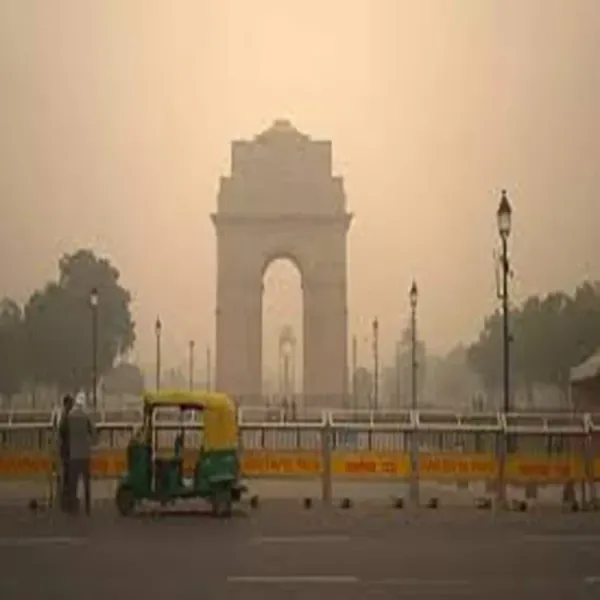
Pollution Levels Ease After Two Days of Poor Air
On Thursday, the city recorded an AQI of 209, categorized as poor. The situation had been more concerning on Wednesday morning, when the index climbed to 294, nearing the upper end of the poor bracket. The latest data suggests a gradual stabilization in pollution levels, although air quality remains far from ideal.
Meteorological conditions may have contributed to the shift. The India Meteorological Department reported a temperature of 12 degrees Celsius at around 7 am on Friday, accompanied by high humidity levels touching 95 percent. Weather patterns often influence the dispersion of pollutants, especially during winter months when cooler air can trap particulate matter close to the ground.
Area-Wise Readings Reveal Mixed Trends
Despite the overall improvement, air quality varied significantly across different parts of the city.
Among the higher readings, Mundka recorded an AQI of 230, while Shadipur stood at 248. Jahangirpuri registered 245, Rohini 221, Bawana 220, and Narela 215. Other locations such as Nehru Nagar and Wazirpur both recorded 207, and Ashok Vihar reported 201. Vivek Vihar stood at 204, Sirifort at 218, and Chandni Chowk registered 176. Pusa, comparatively lower than several other areas, recorded 142.
In contrast, several monitoring stations reflected relatively cleaner air. Sri Aurobindo Marg reported an AQI of 123, while Lodhi Road stood at 135. Major Dhyan Chand Stadium and Mandir Marg recorded 142 and 141 respectively. IIT Delhi registered 144, IGI Airport 141, and Dwarka Sector 8 reported 190, still within the moderate range.
A day earlier, pollution readings were generally higher across the same locations. Sri Aurobindo Marg had recorded 159, IIT Delhi 158, and Lodhi Road 164. IGI Airport, Mandir Marg, Aya Nagar, and Chandni Chowk were all in the mid-160 range. Meanwhile, industrial and outer areas such as Mundka and Sirifort had registered 275 and 277 respectively, underscoring the fluctuation seen over the week.
Understanding AQI Categories
The Air Quality Index is used as a standardized measure to communicate how polluted the air is and what associated health effects might be expected. An AQI between 0 and 50 is considered good, 51 to 100 satisfactory, 101 to 200 moderate, and 201 to 300 poor. Readings between 301 and 400 fall into the very poor category, while values above 400 are labeled severe.
An AQI in the moderate range may cause breathing discomfort for people with respiratory conditions such as asthma, while prolonged exposure to poor or very poor air can affect a wider segment of the population.
Political Debate Over Monitoring Stations
The issue of air quality has also become a subject of political discussion in Delhi. Earlier this week, the Aam Aadmi Party raised concerns about the installation of six new AQI monitoring stations in green and open areas of the city.
Delhi AAP State President Saurabh Bharadwaj questioned the intent behind the move, alleging that the decision by the BJP-led administration under Chief Minister Rekha Gupta could lead to artificially lower pollution readings. According to him, placing monitoring infrastructure in greener zones might project an improved air quality picture without addressing the underlying causes of pollution.
In a post on social media platform X, Bharadwaj claimed that the approach would not reduce emissions but could influence how overall AQI data appears. He also referred to the role of the Commission for Air Quality Management, suggesting that the body had not responded to these concerns.
The BJP government has not issued a detailed response to these allegations. Meanwhile, official AQI data continues to be published daily by the Central Pollution Control Board, forming the basis of public health advisories and environmental policy discussions in the capital.
Contact to : xlf550402@gmail.com
Copyright © boyuanhulian 2020 - 2023. All Right Reserved.