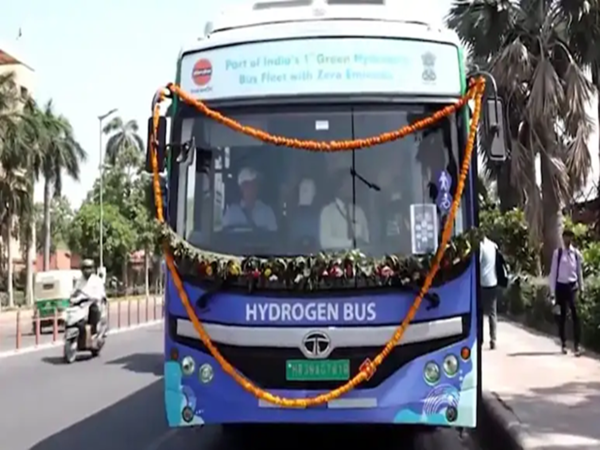
Hydrogen Buses: To curb pollution and promote clean energy within the country, rapid progress is currently being made in the development and deployment of hydrogen buses. Powered by hydrogen fuel cell technology, these buses are not only environmentally safe but are also considered a superior alternative compared to diesel and CNG buses. A key feature is that, instead of emitting smoke, these buses release only water vapor. Consequently, in the coming years, hydrogen buses have the potential to bring about a significant transformation in the country's transportation system.
**How Hydrogen Buses Work**
Hydrogen buses are based on fuel cell technology. In these vehicles, hydrogen gas is stored in high-pressure tanks located on the bus's roof. From there, the hydrogen is channeled to a fuel cell stack, where it undergoes a chemical reaction with oxygen drawn from the ambient air. This process generates electricity, which powers the bus's electric motor. Notably, this entire process does not produce any smoke or toxic gases. Since the bus emits only water vapor, it is considered a completely eco-friendly technology.
**The Impact on CNG Buses**
Hydrogen buses represent a cleaner and more modern alternative compared to CNG buses. Currently, in several locations, the use of H-CNG technology—which involves blending hydrogen with CNG—has already commenced. This practice helps reduce carbon emissions. However, as hydrogen production and refueling infrastructure continue to develop in the future, hydrogen buses could gradually replace CNG buses. The operational costs for these buses are also expected to be lower, which could potentially make commuting more affordable for the public.
**Advantages of Hydrogen Buses**
The most significant advantage of hydrogen buses is their zero-emission status. This can play a major role in reducing air pollution. Furthermore, these buses can travel approximately 600 kilometers on a single tank refill. For long-distance travel, they are considered a far superior option compared to diesel and CNG vehicles.
Refueling these buses also takes very little time. While battery-based electric buses take a long time to charge, hydrogen buses can be refueled in just a few minutes.
These buses generate very little noise, thereby reducing noise pollution.
Disclaimer: This content has been sourced and edited from NDTV India. While we have made modifications for clarity and presentation, the original content belongs to its respective authors and website. We do not claim ownership of the content.
Contact to : xlf550402@gmail.com
Copyright © boyuanhulian 2020 - 2023. All Right Reserved.