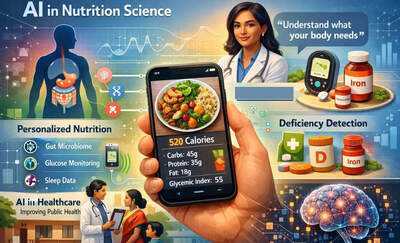
From tailored meal plans to the early identification of nutritional deficiencies, artificial intelligence is emerging as a vital partner in enhancing health.
Dr. Radhna Gupta
Artificial intelligence is transforming the landscape of nutrition science. With AI-driven applications, users can now take a picture of their meal and receive instant estimates of its calorie count, macronutrient composition, and glycaemic index—tasks that previously required a dietitian's expertise and reference materials.
The capabilities of this technology extend beyond simple calorie tracking. Research from Stanford University indicates that individuals can have vastly different blood sugar responses to the same foods, challenging the traditional one-size-fits-all dietary guidelines. AI systems that analyze gut microbiome data, sleep habits, and continuous glucose monitoring can now forecast how a specific individual will react to particular meals, making personalized nutrition a reality.
Dr. Amara Patel from King’s College London states, “For the first time, AI enables us to comprehend what your body specifically requires, which is a different question from what the average human needs.”
The implications for public health are profound. Iron deficiency impacts 1.2 billion people globally, while vitamin D deficiency is prevalent in northern regions. AI tools that analyze dietary and biomarker data are proving effective in identifying these deficiencies sooner than traditional clinical methods. In India, state governments are testing AI-enhanced nutrition monitoring in public health clinics, yielding promising results in detection rates and patient compliance with dietary recommendations.
AI's ability to analyze extensive datasets is also advancing nutritional science. Machine learning models are revealing previously unnoticed connections between dietary habits and chronic illnesses like type 2 diabetes, heart disease, and certain cancers. These findings are shaping the future of public health guidelines, shifting from generalized recommendations to evidence-based, individualized advice.
However, some critics warn that the effectiveness of these tools is contingent on the quality of their training data, which has often been biased towards Western dietary habits. A system based on American eating patterns may not be suitable for individuals whose diets revolve around foods like dal or ugali. Dr. Emmanuel Nkosi from the University of Cape Town cautions, “Without intentional diversity in our data, we risk exacerbating existing health disparities.”
Most healthcare professionals see AI as a supportive tool rather than a substitute for human judgment. While algorithms can identify low omega-3 levels, they cannot address the emotional and cultural factors influencing a person's eating habits. As regulatory bodies in the US and EU start to classify AI dietary tools as medical devices, the need for evidence, transparency, and human oversight will become increasingly important. Nutrition has always been a personal journey, and integrating intelligence into it is just the beginning.
Dr. Radhna Gupta
Professor, Department of Food Science,
Nutrition and Technology, COCS,
CKHPKV, Palampur, 176062
Contact: 8219287051
Contact to : xlf550402@gmail.com
Copyright © boyuanhulian 2020 - 2023. All Right Reserved.