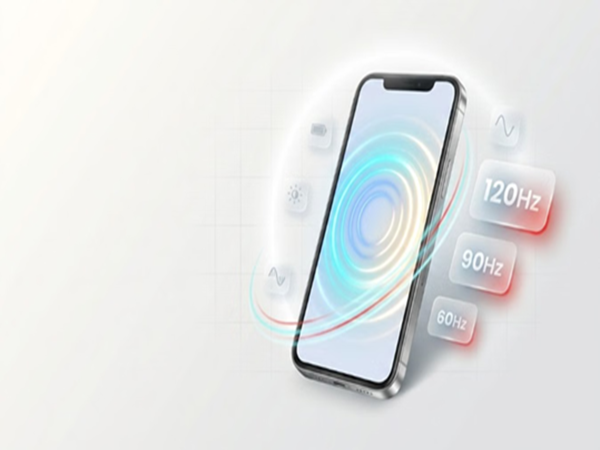
High Refresh Rate Display: Smartphones have undergone significant changes recently. While high-refresh-rate screens were once exclusive to premium, expensive phones, smartphone companies have now brought this feature to mid-range (budget-friendly) devices, offering rates of 90Hz, 120Hz, and even 144Hz. Let’s explore how this display technology can transform your visual experience.
What is Refresh Rate?
In smartphones, the refresh rate refers to how many times the device's screen updates or refreshes itself in a single second. It is measured in Hertz (Hz). For instance, a 60Hz screen updates 60 times per second, a 90Hz screen updates 90 times per second, and a 120Hz screen updates 120 times per second.
Essentially, the more frequently the screen refreshes, the smoother and more fluid the visual quality becomes. Every movement on the screen appears more natural and clear.
Why are phones with high refresh rates gaining popularity?
Those familiar with this feature often prioritize the refresh rate when buying a phone because it significantly enhances the user experience. Activities like scrolling through social media, switching between apps, navigating menus, and viewing animations feel much smoother.
Once users experience a 120Hz display, a 60Hz screen often feels comparatively sluggish. This is why companies are now highlighting high refresh rates as a key selling point (USP).
Who is a 60Hz display suitable for?
60Hz has long been the standard in the smartphone industry. It remains adequate for calling, messaging, web browsing, watching videos, and general everyday use.
However, it ultimately depends on your specific usage habits. If your usage is basic and you prioritize battery life, a 60Hz display can be a good choice.
What makes a 90Hz display special?
A 90Hz screen offers a smoother experience compared to 60Hz. The difference is clearly noticeable when scrolling through social media feeds, opening apps, and navigating the interface.
This is why 90Hz displays have become quite popular in the mid-range smartphone segment over the last few years.
Why is the 120Hz display becoming the new standard?
A 120Hz refresh rate is now found not only in flagship phones but also in many mid-range smartphones. It offers the most fluid experience.
The benefits—such as faster scrolling, high-frame-rate gaming, and smooth animations—are clearly visible on a 120Hz display. It is considered a significant upgrade for gamers and heavy smartphone users.
So, does a high refresh rate drain more battery?
Yes, a high refresh rate requires the screen to update more frequently, which can increase battery consumption. To mitigate this, many smartphones now feature "adaptive refresh rate" technology. This automatically adjusts the refresh rate based on the task at hand.
For instance, the refresh rate might drop while watching a video but increase during gaming or scrolling. This ensures both a smooth experience and better battery life.
How important is the refresh rate when buying a smartphone?
If your usage is limited to basic tasks, a 60Hz display is sufficient; however, if you engage in social media, multitasking, or gaming, or simply desire a superior visual experience, a smartphone with a 90Hz or 120Hz display would be a better choice.
Disclaimer: This content has been sourced and edited from Amar Ujala. While we have made modifications for clarity and presentation, the original content belongs to its respective authors and website. We do not claim ownership of the content.
Contact to : xlf550402@gmail.com
Copyright © boyuanhulian 2020 - 2023. All Right Reserved.