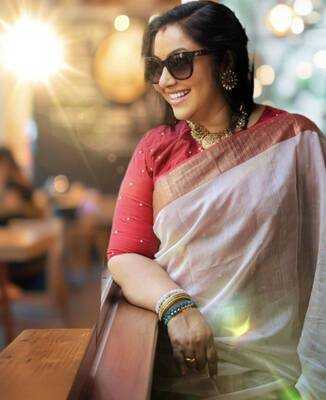
Returning to action after nearly three decades, veteran actor Tharanooradha Venu reveals the physical toll of performing fight sequences in Rudravatara , while reflecting on meaningful roles for women and the changing face of Kannada cinema .
"The last time I shot for elaborate fight scenes was in the 1990s. And now, I paid for it physically," she says with a laugh. "At this age, your body reminds you of every move you make. But I wanted to do it. We shot fight scenes over five consecutive nights, and they were specially choreographed for me by action master Vinod. He was incredibly patient whenever I came up with excuses and said, 'Idella agalla kano' (I can't do this)," she smiles.
The conversation, however, quickly moves beyond action. Thara belongs to an era when women often headlined films driven by strong stories, and she believes Kannada cinema has always had room for female-led narratives .
"My own film Hebbettu Ramakka is proof. People still talk about it today. If the subject demands it, audiences will embrace a heroine-led film. The only condition is that the story must convincingly justify why it is centred on a woman," she says.
She also points out that Kannada cinema has a rich legacy of literary adaptations.
"For the longest time, I was labelled an 'art film heroine'. People even called me the Kannada Shabana Azmi. I used to think I hadn't done many such films. But when I looked back, I realised I'd probably acted in the highest number of novel-based films. It was only when I appeared on Ramesh Aravind's TV show that I learnt I had played the most author-backed roles. That felt truly special," she recalls.
Does she agree with younger actresses who feel meaningful roles are becoming scarce?
"I absolutely do. They deserve better. Filmmakers often say heroine-led films don't make money and therefore invest heavily in hero-centric films. But I'd like them to show the actual numbers of how those films are performing," she says.
Reflecting on an industry in transition, Thara notes how dramatically filmmaking has changed. "There was a time when nearly 70 productions would be on the floors in a month. Today, even seven simultaneous shoots seem rare. We're living in the age of AI. Dubbing is changing. Entertainment itself has changed. Today, even window shopping is entertainment. Nobody is indispensable anymore. If work comes your way, be grateful and give it your best," she says.
Contact to : xlf550402@gmail.com
Copyright © boyuanhulian 2020 - 2023. All Right Reserved.