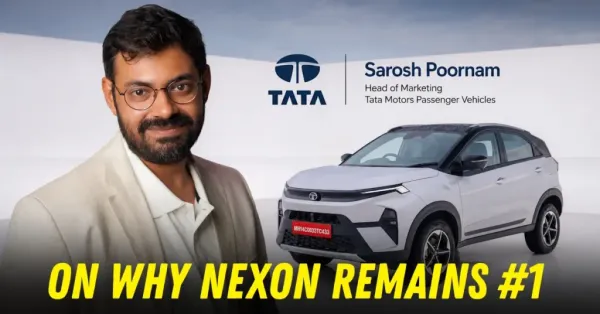
The Tata Nexon has had an unusual journey in the Indian car market. Launched in 2017, it wasn’t an overnight blockbuster. Instead, the compact SUV steadily gained momentum, with Tata Motors continually adding new powertrains, transmissions, features and technologies.
Today, the Nexon is available with petrol, diesel, CNG and electric powertrains, and Tata has expanded the range from roughly 10 variants at launch to a seemingly bewildering array of choices. Along the way, the Nexon became India’s first car to score five stars in Global NCAP crash testing, helped mainstream turbo-petrol engines, took electric cars to a much larger audience and even brought features such as a panoramic sunroof and 360-degree camera to surprisingly accessible price points.
The result? More than 10 lakh Nexons are now on Indian roads, and the SUV has grown considerably stronger with age rather than fading away towards the latter part of its lifecycle.
Jayaprashanth Mohanram, Editor, CarToq, caught up with Sarosh Poornam, Head of Marketing, Tata Motors Passenger Vehicles, to understand what has kept the Nexon going, why Tata offers such a huge number of variants, the role safety has played in the SUV’s success, the Nexon EV’s impact on India’s electric car market and whether another powertrain – a hybrid – could eventually join the family.
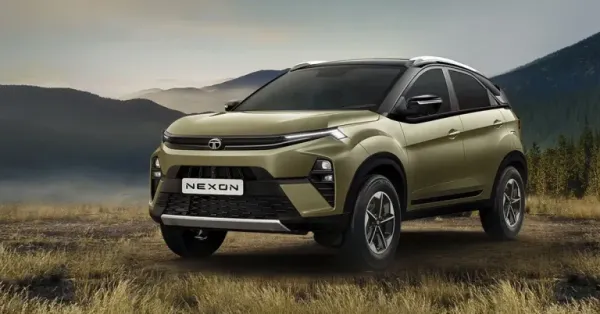
Jayaprashanth Mohanram: Sarosh, you’re handling one of Tata Motors’ terrific sellers. Getting to the top is one thing, but sustaining that position is arguably a bigger challenge. What’s the strategy with the Nexon?
Sarosh Poornam: Right from the beginning, the intention with the Nexon has been to offer an elevated SUV experience. We haven’t deviated from that. If anything, we’ve enhanced it over time.
The proposition has consistently been about offering a strong overall package: differentiated design, turbo-petrol performance, the right choice of powertrains, high levels of safety and next-level technology. Importantly, our philosophy has been that these attributes shouldn’t necessarily be restricted to premium segments.
Consumer expectations have evolved significantly over the last 10 years, and the Nexon has continuously offered both aspirational and meaningful upgrades across design, safety and technology while also introducing the right powertrains. Another important element has been expanding the customer base through a multi-powertrain strategy. That’s where petrol, diesel, CNG and EV come in. We want customers to be able to choose a powertrain based on their use case without necessarily compromising on the features and equipment they aspire to have.
The Nexon has also consistently democratised technology. It has introduced several segment-first and segment-best attributes and features. That’s been an important part of its success.
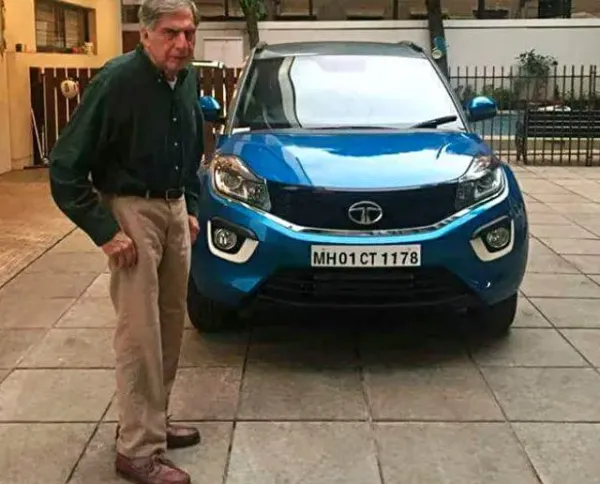
Jayaprashanth Mohanram: When the Nexon arrived in 2017, the petrol started at ₹5.85 lakh and the diesel at ₹6.85 lakh. That was disruptive, particularly because a 1.2-litre turbo-petrol engine was almost unheard of at that price. Nearly a decade later, prices have obviously risen significantly. How have you managed to retain the Nexon’s value proposition through all these years?
Sarosh Poornam: There have been multiple positive challenges. The most important thing is that the Nexon has never remained a static product. We don’t necessarily wait for a model change or a complete model change to introduce upgrades and enhancements. Our track record demonstrates that.
At the same time, there’s considerable complexity involved in offering multiple powertrains and making those available to customers across multiple locations and geographies while continuing to deliver the right combination of features, safety and value. We’ve consistently tried to maintain a strong value proposition for customers. I wouldn’t point towards one specific challenge. It’s been a constant evolution of challenges, and we’ve continuously responded to them.
Jayaprashanth Mohanram: That’s something particularly interesting about the Nexon. When it was initially launched, it was a steady seller rather than an instant blockbuster. But it kept getting stronger. You’ve gone from roughly 10 variants at launch to more than 40 permutations today if we count the different powertrains and transmissions. Usually, as a car gets older, competition increases, consideration starts declining and discounts begin appearing. The Nexon seems to have done the opposite. Its market share has grown dramatically. Why?
Sarosh Poornam: Firstly, the Nexon has never been static. It has constantly evolved in line with customer expectations and needs. Secondly, this segment – and the Nexon specifically – caters to an extremely wide spectrum of customers. Offering them a wide choice is therefore important.
That’s where the multi-powertrain strategy becomes relevant. Customers have different needs, use cases and usage patterns. The first filter for many customers is actually fuel type and transmission. Once they’ve made that decision, they start considering their budget and the functional requirements they have from the car. That’s where the trim strategy comes in.
Jayaprashanth Mohanram: But doesn’t having so many Nexon variants become confusing for the customer?
Sarosh Poornam: If you simplify the range, the customer is essentially choosing between seven trims. Then there are options such as a sunroof or Dark variants. The customer has already filtered the range based on powertrain and transmission before getting to that point. So while the overall number might appear very large, the customer’s actual decision is considerably simpler.
More importantly, every trim and edition has been backed by strong customer preferences. We want customers to find value at whichever level they choose.
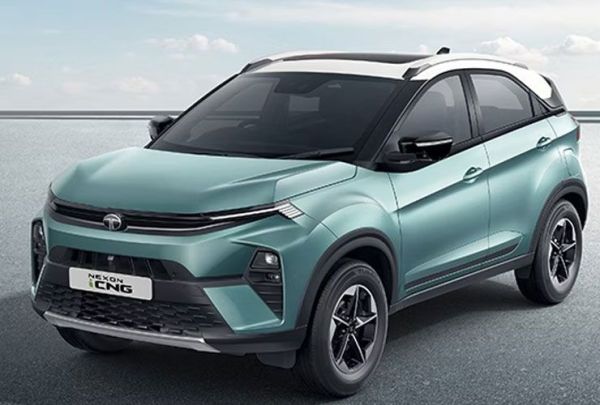
The other aspect has been democratising premium experiences. Take the panoramic sunroof, our DCT or iCNG technology. Nobody expected CNG technology to deliver a premium experience, but we’ve offered it across the trim line-up. Then there are features such as a 360-degree camera and panoramic sunroof at below the ₹10 lakh price point.
These things have helped keep the Nexon relevant and aspirational. And now there’s another important advantage: more than 10 lakh Nexon customers are already on the road. That translates into brand trust. Customers have seen the Nexon constantly evolve and improve, and that gives them confidence in the product.
Jayaprashanth Mohanram: Where are Nexon sales coming from geographically? Because this isn’t merely an urban phenomenon anymore. Drive through rural Maharashtra during the monsoon and you’ll find Nexons even in remote villages. Urban and rural customers can have very different aspirations and use cases. What’s driving Nexon’s success in semi-urban and rural India?
Sarosh Poornam: The Nexon has pan-India presence and acceptance. Aspiration across different levels is driving that acceptance across the length and breadth of the country. It also has very strong appeal among first-time car buyers, which becomes important when you’re talking about such a wide geographical footprint. Again, the multi-powertrain strategy plays a role because customers can choose between petrol, diesel, CNG and EV depending on their budget and requirements.
But the inherent attributes of the Nexon are equally important. It delivers that elevated SUV experience across very different topographies, road conditions and weather conditions. It’s at home in the monsoon and equally comfortable in regions that remain hot for most of the year.
Jayaprashanth Mohanram: So the SUV experience itself is a major driver even for customers in semi-urban and rural markets?
Sarosh Poornam: Yes. It’s the comfort, convenience and confidence customers get from driving the Nexon. That’s something that really works for the product.
Jayaprashanth Mohanram: Let’s talk about safety, because Tata Motors was one of the first manufacturers in India to aggressively push the five-star safety narrative. Are you now seeing safety consciousness spread into smaller towns as well?
And how instrumental has the Nexon itself been in changing that conversation? Ten years ago, buyers rarely asked whether a car had a five-star crash-test rating. Today, that’s a common question.
With more than 10 lakh Nexons on the road, that’s potentially a very large influence. And when customers choose the Nexon for safety, is there one particular thing they respond to – airbags, the strong body structure, active safety technology – or is it the overall package?
Sarosh Poornam: Safety is a fundamental part of Tata Motors Passenger Vehicles’ product philosophy. The fact that we were the first manufacturer to establish our own crash-test facility demonstrates the importance we place on safety for our products and customers.
Coming specifically to the Nexon, it was the first Indian car to achieve a five-star crash-test safety rating. More than being merely a milestone for the Nexon, I think it shifted the safety narrative for the entire country. Customers began considering safety as an important attribute when purchasing a car. It established a benchmark not only within the segment but across the industry. We’ve seen how the safety conversation and the safety equipment offered in India have progressed since then.
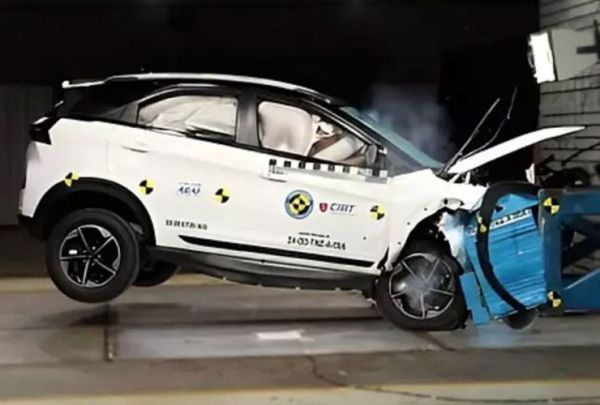
At the same time, the Nexon’s safety story hasn’t simply been about improving crash performance. We’ve continuously added safety technology. The Nexon today offers a wide range of active and passive safety features. I wouldn’t attribute customer confidence to one particular safety feature. It’s the complete package.
More importantly, it’s the feeling of confidence you get when you’re driving the vehicle, knowing you’re sitting inside a car with robust body architecture. That’s something we consistently hear from customers. And beyond whatever manufacturers can demonstrate, customers have also seen numerous real-world incidents shared on social media.
People have seen examples of the protection these cars provide in real accidents. That becomes very strong proof for consumers and has only increased the importance people attach to vehicle safety. That’s a very positive development.
Jayaprashanth Mohanram: The Nexon has introduced quite a few things that subsequently became mainstream. There’s five-star safety, turbo-petrol performance, the Nexon EV, CNG and now even a panoramic sunroof.
Was there ever a single inflection point in the Nexon’s journey where you suddenly realised the product had shifted into another gear?
Sarosh Poornam: I don’t think we can attribute the Nexon’s growth to one single inflection point. The objective has always been to deliver a strong package across the different attributes customers care about. Every time we’ve introduced a segment-best, segment-first or sometimes even industry-first feature or product offering, it has helped the Nexon grow stronger.
If I had to highlight some of those elements, I’d start with the differentiated, coupe-inspired design. Then there’s the elevated SUV experience. You get a commanding driving position, which improves visibility and gives the driver confidence.
You also have strong ground clearance, so that confidence isn’t merely about seeing the road ahead; it’s also about tackling it. We were also among those who mainstreamed turbo-petrol performance, and we’re continuing to build on that. Then there has been our “New Forever” philosophy – continually enhancing not just features but the overall appeal of the product and brand.
Jayaprashanth Mohanram: The Nexon’s list of firsts has become fairly substantial.
Sarosh Poornam: Absolutely. It was the first Indian car to achieve a five-star crash-test rating. We mainstreamed turbocharged petrol performance.
With CNG, we’ve introduced twin-cylinder technology and a premium CNG experience. More importantly, the Nexon is the first and only turbocharged CNG offering, which matters because it’s the complete experience that customers are looking for. We’ve also consistently democratised features by introducing them at price points where customers wouldn’t normally expect them.
A 360-degree camera below ₹10 lakh is one example. A panoramic sunroof below ₹10 lakh is another. It’s this combination of improvements, introduced continuously over time, that customers have come to appreciate – and, importantly, expect from the Nexon.
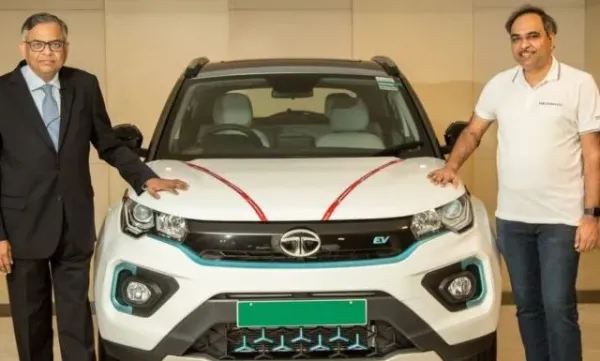
Jayaprashanth Mohanram: There’s another interesting aspect to the Nexon EV. Some very prominent people have chosen to drive one – people such as Tata Sons Chairman N Chandrasekaran, Dr Sriram Nene and Zoho co-founder Sridhar Vembu. Tata hasn’t aggressively used celebrity ownership in its advertising, but does having such high-profile Nexon EV owners create a halo effect for the brand?
Sarosh Poornam: The Nexon EV was really India’s first mainstream electric vehicle. Whenever you introduce a new technology or something customers haven’t experienced before, irrespective of the category, the early adopters often include public figures and prominent people. So yes, there is certainly a positive rub-off.
But I think the more important factor has been the strong product proof right from the beginning. The Nexon EV has remained true to the broader Nexon philosophy by offering strong technology and continuously evolving and improving over time.
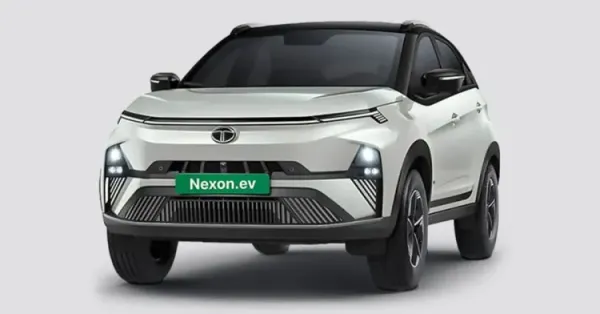
The Nexon EV paved the way for a large number of customers to adopt electric vehicles. But I’d go beyond customers. The success of the Nexon EV also encouraged other manufacturers and OEMs to enter the EV category – not merely with one vehicle, but with multiple products. We’ve watched the EV category grow right from the beginning.
Today, with the Nexon EV having crossed one lakh customers, that speaks volumes about the product and its capabilities. It has clearly played a role in shaping India’s EV industry as a whole.
Jayaprashanth Mohanram: The multi-energy strategy has clearly worked for the Nexon. You started with petrol and diesel, offered multiple transmission choices, added an EV and then CNG.
Now we’re seeing increasing industry interest in hybrids, particularly with upcoming CAFE norms. Could hybrid technology eventually become the next addition to the Nexon powertrain family?
Sarosh Poornam: We’ve always maintained that electrification is the destination technology when it comes to mobility. The Nexon EV and the current growth rate of electric vehicles have demonstrated that. Having said that, we’ll constantly monitor consumer needs and preferences. We have the capability to respond with the right intervention at the right time if required.
Jayaprashanth Mohanram: So you’re not ruling out a Nexon hybrid? Essentially, if market demand develops, Tata Motors has the capability to respond?
Sarosh Poornam: We have the capability, and we can respond.
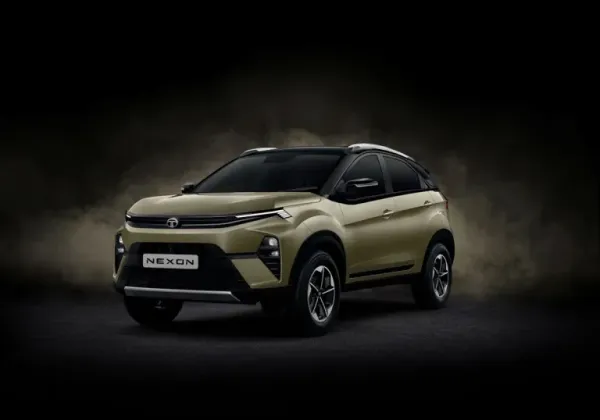
Perhaps the most interesting takeaway from our conversation with Sarosh Poornam is that Tata Motors itself doesn’t identify one magic moment that transformed the Nexon. Instead, its success appears to have been cumulative.
The Nexon began with an unusual coupe-inspired design and turbocharged petrol engine. It subsequently became India’s first five-star Global NCAP-rated car. Tata added more transmissions, repeatedly refreshed the product, took the Nexon electric, introduced twin-cylinder CNG technology without sacrificing much of the boot, and kept pushing expensive features down the price ladder.
At the same time, the Nexon’s four-powertrain strategy means the badge now caters to customers with dramatically different requirements – from a rural diesel SUV buyer to an urban EV owner.
Nearly a decade after launch, that constant evolution has helped the Nexon do something relatively unusual in India’s fiercely competitive sub-4 metre SUV market: become stronger with age rather than slowly fade away.
Contact to : xlf550402@gmail.com
Copyright © boyuanhulian 2020 - 2023. All Right Reserved.