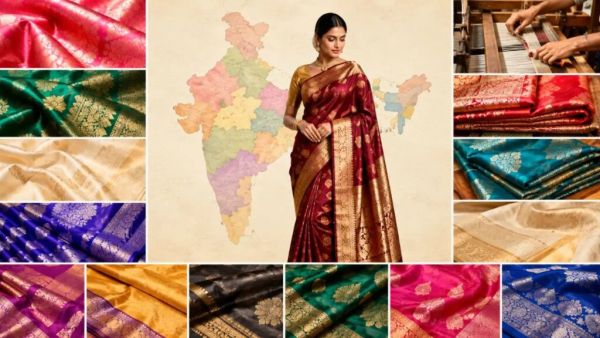
India’s Handloom Sarees: A Cultural Heritage
New Delhi: Handlooms in India are not just textiles, but a symbol of our cultural heritage. From rural areas to urban areas, artisans still hand-weave saris that are globally renowned. On the occasion of National Handloom Day, let’s find out which saris from which states are most famous.
North India: From Banaras to the Mountains
Uttar Pradesh’s Banarasi silk saris come first. These saris, with gold, silver, zari, and brocade work, take months to complete and remain a favorite at weddings.
Punjab is famous for its Phulkari embroidery, which features colorful threadwork on dupattas and saris. Haryana also offers lightweight silk Dhuriya saris.
Himachal’s Kullu Patti saris are made from Moonga silk, while Uttarakhand’s Panchachuli handloom saris are known for their simple weave.
Western India: A Fusion of Color and Bandhani.
Gujarat’s Patola sarees and Ikat print silk sarees are popular worldwide. The double Ikat weave makes them distinctive.
In Rajasthan, Lahariya, Bandhani, and tie-and-dye sarees enhance every festival. Bright colors and wavy designs are their hallmarks.
Goa’s Kunbi saree is a red-and-white checkered cotton saree, traditionally woven by tribal communities.
Central India: From Kosa to Chanderi
Madhya Pradesh’s Chanderi sarees, suits, and dupattas are renowned for their transparent weave. They are light and lustrous. Chhattisgarh’s Kosa silk sarees are known for their natural sheen.
East India: Tussar and Jamdani
Bihar’s Bhagalpuri tussar silk sarees and Jharkhand’s tribal tussar sarees stand out for their rough texture. West Bengal’s Baluchari and Jamdani, which depict mythological stories, are the most popular. Assam’s golden Muga sarees shine even brighter with washing. Eri silk from Meghalaya, Lepcha from Sikkim, and the tight-woven sarees from Nagaland are also special.
South India: The King of Silk
The Kanjeevaram saree from Tamil Nadu is considered the most precious, with its heavy zari and vibrant colors. Kerala’s Kasavu saree is distinguished by its white color and golden border, and is especially worn during Onam and festivals. Telangana’s Pochampally Ikat saree is available in a soft silk-cotton blend.
Andhra Pradesh’s Uppada Jamdani and Karnataka’s Ilkal sarees are famous for their temple borders. Behind every saree lies the culture of a state and the hard work of a weaver. By purchasing a handloom saree this Handloom Day, you can help support an artisan family.
Contact to : xlf550402@gmail.com
Copyright © boyuanhulian 2020 - 2023. All Right Reserved.