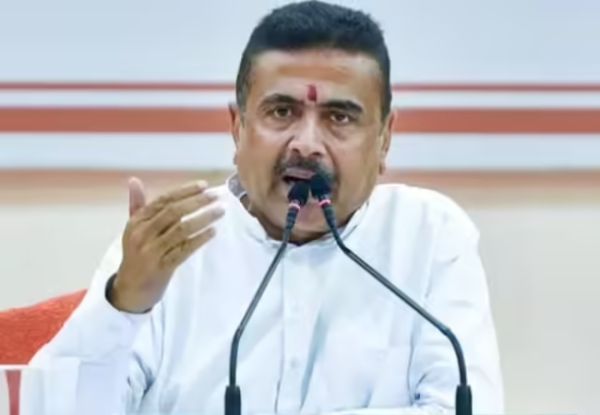
West Bengal Mosque Loudspeaker Controversy: The issue of removing loudspeakers from mosques in Murshidabad, West Bengal, appears to be a new political controversy. Murshidabad MP Abu Taher Khan and Jangipur MP Khalilur Rahman met with Chief Minister Suvendu Adhikari on Saturday regarding the matter. Expressing concern over the removal of loudspeakers from religious sites, they urged the government to halt the action. Following the meeting, Abu Taher Khan alleged that Muslims were being targeted in the state. However, the Chief Minister clarified that the action was not directed against any particular community, but rather in accordance with High Court directives and noise pollution regulations. During the meeting at Nabanna, the MPs raised two key issues with the Chief Minister: the first was regarding the SIR to the voter list, and the second was regarding the use of loudspeakers at religious sites. According to Abu Tahir Khan, approximately 2.7 million people have been removed from the SIR process, and a large number of cases are still pending before tribunals. He claimed that a significant number of these individuals are from the working class and those who are not fully aware of the government’s paperwork. The MP stated that in many cases, minor spelling or spelling errors have led to the removal of people’s names from the list.
Abu Tahir Khan demanded that the Chief Minister reinstate these people’s names and expedite hearings for those whose cases are pending. According to him, the Chief Minister stated that out of the approximately 2.7 million affected people, approximately 700,000 have applied for hearings, while approximately 2 million have yet to appeal. The MP urged the government to extend the deadline for applications for the remaining people. He also indicated that the matter could be taken to court if necessary. The MPs stated that the impact of removing names from the voter list is not limited to electoral rights, but may also hinder people’s access to government schemes and other benefits. Therefore, they appealed to the Chief Minister to adopt a humane and practical approach to this matter.
The second and more sensitive issue of the meeting was the use of loudspeakers at mosques and other religious places. Abu Tahir Khan stated that the removal of loudspeakers used for Azaan (call to prayer) in mosques was a matter of serious concern for him. He appealed to the government to halt the action, stating that religious activities should not be unnecessarily disrupted. However, he also stated that he was willing to comply with the Supreme Court and High Court guidelines and the laws to noise pollution. The Chief Minister reportedly clarified that the removal of loudspeakers was not being targeted at any one religion or community. Noise pollution regulations at religious places were being implemented in accordance with the High Court’s directives. According to Abu Tahir Khan, the Chief Minister also reminded him that an order had already been issued in this regard, and the current government was in power in the state at the time. Therefore, prior orders and legal procedures should be reviewed before questioning this action.
According to reports, approximately 3,500 loudspeakers have been removed so far. These reportedly include approximately 1,200 loudspeakers attached to temples. The government argues that the action is not limited to any one religious community, but is being implemented at all religious sites based on regulations. Despite this, some Muslim community leaders and public representatives remain dissatisfied with the removal of loudspeakers from mosques. Indian Secular Front MLA Naushad Siddiqui has also raised questions about this issue. He objected to the manner in which the removal of loudspeakers from mosques was carried out and alleged that in some places the police are taking action without written orders. This appears to be turning the matter from a mere administrative action into a political controversy. Significantly, before meeting the Chief Minister, both MPs had also met with Prime Minister Narendra Modi and Union Home Minister Amit Shah. On Friday, Abu Tahir Khan and Khalilur Rahman met with Prime Minister Modi at the Prime Minister’s residence. This meeting came amid speculation that both MPs would join the BJP. However, Abu Tahir Khan clarified that he would not join the BJP and would remain with the NCP.
The two MPs from Murshidabad’s frequent meetings with top leaders in Delhi and at the state level have further intensified the debate in Bengal politics. On one hand, there is a controversy involving millions of names regarding the SIR, while on the other, the issue of removing loudspeakers from religious sites has become a sensitive political debate. All eyes will now be on how the government implements this action and whether any additional relief is provided to those affected by the SIR process. As political rhetoric intensifies on both issues, Murshidabad has once again become the center of West Bengal politics.
Contact to : xlf550402@gmail.com
Copyright © boyuanhulian 2020 - 2023. All Right Reserved.