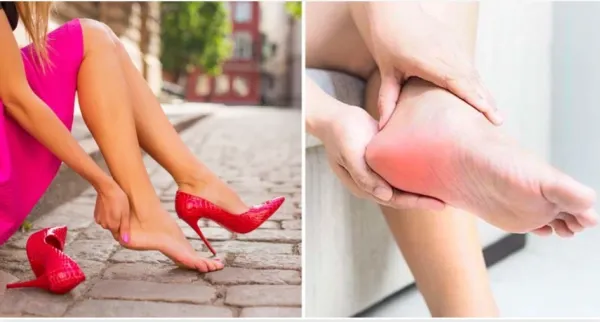
High Heels Foot Pain Tips: A fondness for wearing high heels can often cause great trouble for the feet. Wearing high heels for long periods of time increases the risk of serious problems such as corns and bunions, along with heel and toe pain. For daily use, choosing heels with low height, wide toe box with enough space and good cushioning can prove to be more comfortable for the feet.
Wearing high heels certainly makes the look stylish and glamorous, but wearing them for long periods of time can cause foot and heel pain. Especially heels that are too narrow in the forefoot or that don’t provide proper foot support, put too much pressure on the forefoot. According to the Mayo Clinic, high heels put extra pressure on the front of the foot, and wearing ill-fitting sandals or shoes for long periods of time increases the risk of foot pain, corns, bunions and other problems.
Why do high heels cause foot and heel pain?
When wearing high heels, the entire weight of the body shifts to the front of the foot. This disrupts the normal balance of weight between the toes and the heel. If the heel is too high and the ‘toe box’ of the shoe is narrow, the pressure on the toes increases. This same pressure is the main cause of pain, inflammation or fatigue when walking or standing for long periods of time. In some cases, persistent wearing of the wrong footwear can also lead to problems like metatarsalgia, which is a sharp pain in the forefoot.
1. While buying heels first look at their height
If you are buying heels for everyday use, it is more imperative to choose low heels instead of very high heels. According to advice from Guy’s and St Thomas’ NHS Foundation Trust, keeping heels below 4 centimeters (about 1.5 inches) for everyday wear helps reduce pressure on the feet. Also, wide block heels provide more stability as compared to thin stiletto heels. If you want to wear high heels for parties or special occasions, you should avoid standing or walking while wearing them for a long time.
2. The more open the toe box, the more comfortable the feet will be
While buying heels, don’t just look at the design or color, but also check the space in the front of the shoe. Shoes that are too narrow or too narrow can cause the toes to get wet from the inside. The Mayo Clinic also recommends footwear that has a toe box wide enough to allow the toes to spread comfortably even while standing. Walk a few steps in the heels and see if the toes are pressing inward. While buying a shoe, it is equally important to check its length as well as its width.
3. Also pay special attention to cushioning and support
Fashionable heels don’t mean they can’t be comfortable. Having enough cushioning inside the shoes or heels can reduce the shock and pressure generated between the feet and the ground. If you already have pain in your heel, soft insole or heel pad options can be chosen. The UK’s health agency NHS also recommends using soft-soled, comfortable shoes and, if necessary, soft insoles or heel pads for heel pain.
4. When is the right time to buy heels?
The timing of buying heels or shoes also has a big impact on their fitting. Due to walking and jogging throughout the day, there is a general swelling of the feet in the evening. Therefore, according to the Mayo Clinic, it is useful to try on heels or shoes only at the end of the day, i.e. in the evening. Both feet are not necessarily the same size, so it is best to choose the fitting according to the measurement of the larger foot. The most important thing is that the feet should feel comfortable as soon as they wear the new shoes. Never buy tight heels thinking “they will loosen later”.
Avoid wearing high heels continuously if pain occurs
If heel or toe pain occurs after wearing high heels, rest the feet for a few days and wear comfortable footwear with flat or low heels. Ice packs are beneficial for heel pain; An ice pack can be placed on the heel for about 20 minutes by wrapping a piece of ice in a cloth. If the pain persists, worsens, makes it difficult to walk or is swollen, a doctor or physiotherapist should be consulted immediately.
Contact to : xlf550402@gmail.com
Copyright © boyuanhulian 2020 - 2023. All Right Reserved.