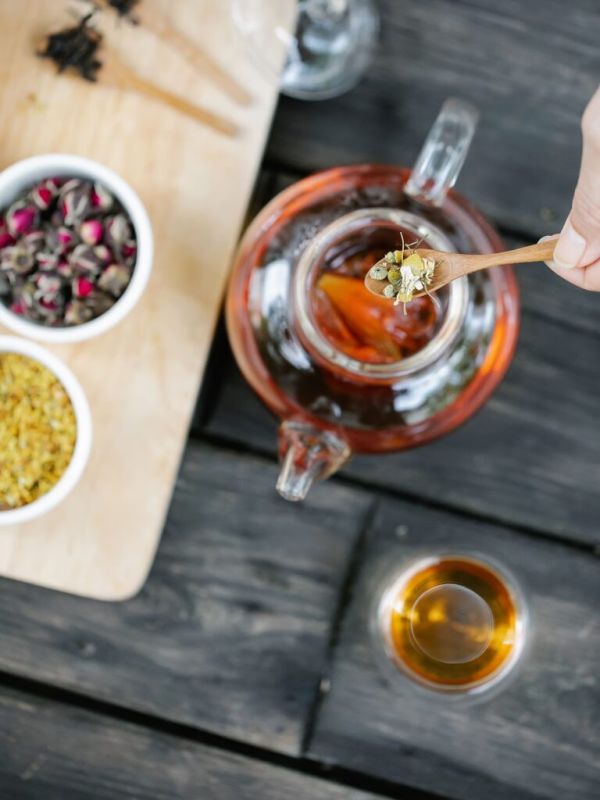
4 Tips to Check for Artificial Dyes in Your Tea
Tea is a daily beverage for millions of people, but concerns sometimes arise about whether artificial colours have been added to tea leaves to make them appear darker, brighter or more attractive.
While colour alone cannot prove adulteration, there are a few simple checks you can use at home to identify possible added colour.
1. Try the Cold-Water Test
Take a transparent glass of room-temperature or cold water and add a small amount of dry tea leaves.
Genuine tea generally takes time to release its colour because the compounds responsible for the brew develop through extraction.
If the water develops a strong, unusually intense colour almost immediately, it may indicate the presence of added colouring matter.
However, this test is only a screening method and cannot confirm adulteration.
2. Rub the Tea Leaves on a Wet Surface
Take a few tea leaves and rub them gently on a wet white tissue or paper towel.
If the paper develops a strong artificial-looking stain almost immediately, the tea may contain added colour.
Natural tea can also leave some colour, so don’t consider a stain alone definitive proof.
3. Check How Quickly the Brew Changes Colour
Prepare tea using plain hot water rather than milk or sugar.
Observe how the colour develops.
A normal tea infusion generally changes gradually as the leaves release their soluble compounds. An unusually rapid and intense colour release can be a reason to investigate further.
Keep in mind that different varieties of tea naturally produce different colours, from pale golden to deep reddish-brown.
4. Look at the Leaves and Packaging
Before buying tea, examine the product carefully.
Look for:
- Uniform, natural-looking tea leaves
- Unusual bright or highly glossy appearance
- Powder or colour collecting at the bottom of the packet
- Proper packaging and labelling
- FSSAI licence details where applicable
- A reputable manufacturer and intact seal
Buying from a reliable brand or established seller reduces the risk of purchasing adulterated products.
Are Home Tests Enough?
No. Home tests can only raise suspicion. They cannot reliably identify a particular artificial dye or establish whether the amount exceeds a permitted limit.
If you strongly suspect adulteration, the most reliable approach is laboratory testing or reporting the product to the relevant food-safety authority.
The Bottom Line
The cold-water test, wet-paper test, observing the brewing process and checking the product’s appearance and packaging can help you screen tea for possible artificial colouring.
But don’t automatically label tea as adulterated because it releases colour quickly—tea naturally contains pigments and compounds that dissolve in water. For a definitive answer, laboratory analysis is required.
Contact to : xlf550402@gmail.com
Copyright © boyuanhulian 2020 - 2023. All Right Reserved.